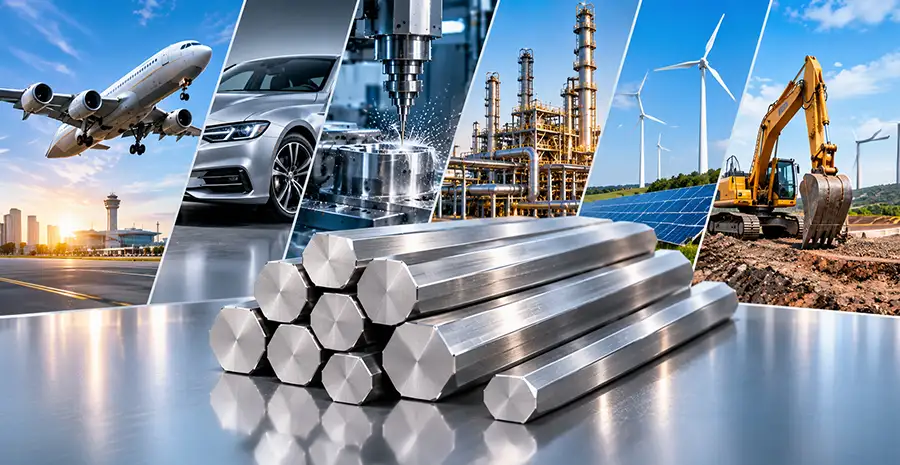
Look closely at a bolt, a pump valve, or a shaft coupling, and you will find a six-sided profile doing quiet, essential work. Viraj Profiles, one of India’s established stainless steel manufacturers, supplies stainless steel hex bars to engineers who depend on that shape for grip, torque, and clean machining. Yet most people never think about where these bars actually end up.
This blog takes you through the industries that lean on them most, and why each one keeps coming back.
Automotive
Vehicles are full of fasteners, sensor housings and steering and transmission parts, and many begin life as hex bar stock. The six flat faces make wrenching easy on an assembly line, while grades such as 304 and 303 machine cleanly in high-volume CNC work. Less scrap and faster cycle times matter a great deal when thousands of identical parts roll out daily.
Oil, Gas and Chemical Processing
Pressure, heat and aggressive media punish ordinary metal quickly. Hex bars in 316 and 310 grades turn into valve components, couplings and fittings that hold their shape and resist corrosion where a failure could shut down an entire plant. Here, dependable material certification matters as much as the metal itself.
Marine and Offshore
Saltwater is relentless. Grade 316, with its added molybdenum, is a favourite for underwater fasteners, mounting hardware and couplers on ships and offshore platforms, since it stands up to chloride attack far better than basic grades.
Food and Beverage Equipment
Hygiene rules leave little room for rust or flaking. Stainless hex bars become bolts, fittings, and machine parts that clean easily and do not react with what passes through them, which is why dairy, beverage, and packaging lines rely on them.
Construction and General Engineering
From anchor bolts in coastal buildings to machinery shafts and bushings, hex bars give builders a strong, low-maintenance option. Aerospace and heavy machinery workshops also pick grades like 416 for parts that need machinability along with hardness after heat treatment.
Choosing the Right Grade
The industry usually decides the grade. Grade 304 suits general use, 316 handles marine and chemical exposure, and 310 copes with high temperatures. Tolerances matter just as much, because a hex bar that is even slightly off size can slow down an entire machining line. Checking standards such as ASTM and ISO before ordering saves costly rework.
Conclusion
Whether it is a car on the road, a valve on an offshore rig, or a conveyor in a dairy plant, stainless steel hex bars quietly hold modern industry together. Their strength, corrosion resistance, and easy machinability explain why so many sectors treat them as a default choice rather than an experiment. Knowing the application first makes picking the right grade much simpler.
Viraj Profiles is among the stainless steel suppliers in India that manufacture and export bars, wires and flats to customers across the globe, with a focus on consistent quality and dependable delivery. Planning a project that needs hex bars? Visit the website or get in touch with the team to discuss grades, sizes, and requirements. Share your drawing or application details, and they will help you shortlist the right grade without the guesswork.
FAQs
1. Which grade of stainless steel hex bar is best for marine use?
Grade 316 is the usual choice because its molybdenum content improves resistance to chloride and saltwater corrosion.
2. Why are hex bars preferred over round bars for fasteners?
The six flat sides give better grip, easier tightening and accurate torque transfer, and they cut down machining effort for nuts and bolts.
3. Which grade works for high-temperature applications?
Grade 310 is commonly used where heat and corrosive gases are both present.
4. Can stainless steel hex bars be machined on CNC machines?
Yes. Free-machining grades like 303 and 416 are especially popular for CNC and conventional machining.

Post A Comment