Among the stainless steel producers in India, Viraj Profiles stands out for one habit: treating every bar as a precision part rather than a commodity. Hex bars show this best because a hexagon looks simply, yet a bar feeding an automatic lathe all day leaves almost no room for error.
Read on to see what happens between the furnace and the final inspection table.
It Starts in the Melt Shop
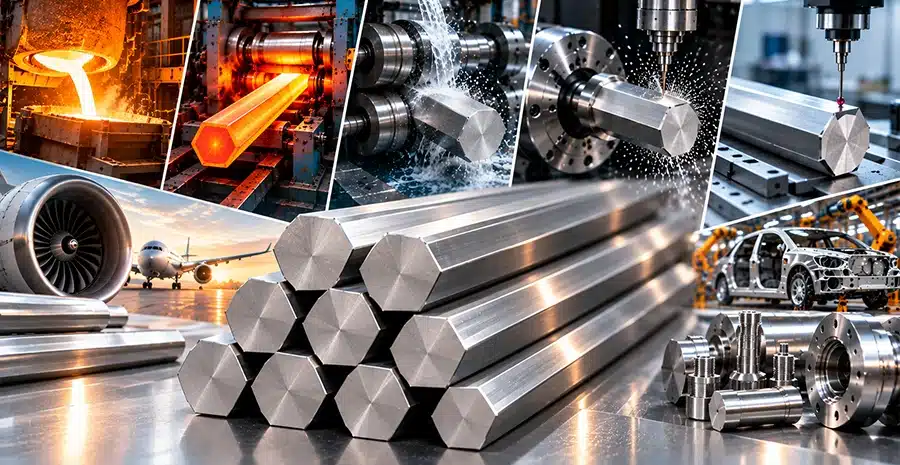
Every bar begins as a molten metal. Viraj operates its own melting capacity, reported at around 348,000 tons a year, so chemistry is controlled from the first heat instead of being inherited from a billet. Nickel, chromium, and molybdenum are balanced for the grade being made, whatever that is 304, 316, or free-machining 303, because small differences here decide how the bar behaves on the shop floor months later.
Rolling, Drawing and Annealing
The billet is hot rolled into rounds, then pulled through a hexagonal die in a cold drawing step. This is where size and shape are locked in and where the surface picks up its clean finish. Cold working also raises strength and hardness, so bars are normally annealed afterwards to bring back ductility and corrosion resistance. Get that balance wrong and the bar either machines poorly or loses the corrosion resistance it was chosen for.
Tolerance Is the Real Test
Precision buyers speak in tolerance. The usual benchmark for cold-drawn hex bars is H11 from the ISO system, commonly paired with EN 10278 for dimensions and ASTM A276 or EN 1088-3 for composition and properties. Straightness and chamfer matter just as much. A bar that bows slightly or carries a rough chamfer can jam a bar feeder and cost a machine shop hour of stoppage.
Where These Bars Go To Work
Hydraulic fittings, valves, pump parts, marine hardware, and food processing equipment all begin as hex stock. The flats give a spanner something to grip and let machinists skip a milling step. Viraj’s long product already serves petrochemical, pharmaceutical, defense, and marine sectors, so documentation, such as EN 10204 3.1 mill test certificates, matters as much as the steel itself.
Checks Before a Bar Ships
Before dispatch, bars are checked for chemistry, dimensions, straightness, and mechanical properties. Machine shops rarely complain about a bar that costs slightly more. They complain about one that changes from lot to lot, which is why consistency across batches counts for more than one perfect piece.
Conclusion
A good hex bar is never the result of one clever step. It is a chain of small decisions from the melt chemistry to the last inspection.
Viraj Profiles, founded in 1992 by Neeraj Kochhar, has grown into one of the largest stainless steel long product manufacturers in the world, serving more than 90 countries with a range that covers wire rods, bright bars, profile flanges, and fasteners.
If you are sourcing stainless steel hex bars for your next production, then send your grade, size, and tolerance details to the Viraj team for a quote built around your drawing.
Frequently Asked Questions
What are stainless steel hex bars used for?
They are used in hydraulic fittings, valves, pump parts, fasteners, marine hardware and food processing equipment. The flat sides give a spanner a firm grip and let machinists skip a milling step.
Which grades are commonly made in hex bars?
Grades like 304, 316, and free-machining 303 are common. Viraj produces austenitic, ferritic, martensitic, and duplex stainless steels, along with special grades for specific needs.
What does h11 tolerance mean?
h11 is a tolerance class from the ISO system and the usual commercial standard for cold-drawn hex bars. It defines how much the across-flats dimension may vary, so confirm the tolerance your application needs before ordering.
Why are hex bars cold drawn?
Cold drawing through a hexagonal die tightens dimensions and gives a cleaner surface. It also raises strength, so bars are usually annealed afterwards to restore ductility and corrosion resistance.
Which standards apply to stainless steel hex bars?
ASTM A276 and EN 10088-3 cover composition and properties, while EN 10278 is commonly used for dimensions and tolerances. Always check which one your industry or export market requires.

Post A Comment